The best holiday activities for recovery groups do two things at once:
- Give people something to look forward to
- Help them prepare for the hard parts of the season.
That means mixing celebration (potlucks, games, gift swaps) with practical tools (exit plans, phone lists, role-plays for awkward conversations). When you plan your sessions around both, your group walks into the holidays feeling more connected and better prepared.
If you lead a recovery group, you already know this season can be complicated. Family gatherings bring up old roles and old resentments. Office parties and New Year’s Eve revolve around drinking. Routines fall apart, meetings get rescheduled, and people who are already isolated can feel even more alone. At the same time, many members are celebrating their first sober holiday in years, and that deserves real recognition.
The activities below work for 12-step meetings, counseling groups, sober living houses and treatment programs. Most take 15 to 60 minutes, need little or no budget and keep sharing optional, so quieter members can take part without feeling put on the spot. Pick one for each session between Thanksgiving and New Year’s, or combine a few for a longer holiday gathering.
Why Recovery Groups Need a Holiday Plan
Holidays don’t create new challenges as much as they stack familiar ones on top of each other. Within a few weeks, your group members may face:
- Family gatherings where alcohol is served and old conflicts resurface
- Parties and work events where they’ll be asked why they aren’t drinking
- Grief over people they’ve lost, including relationships damaged by addiction
- Disrupted routines, canceled meetings and time off with nothing scheduled
Any one of these is manageable. Together, they make the season one of the hardest times of year for many people in recovery, which is why planning ahead in group pays off.
Your group is one of the few places where people can rehearse these moments before they happen. The activities that follow use that space well.
12 Holiday Activities to Try With Your Recovery Group
The activities below are arranged roughly in the order your group will need them. The first few are practical tools to use before Thanksgiving and the first holiday parties, like exit plans, role-plays and phone lists. The middle of the list focuses on connection and celebration, with potlucks, gift swaps, service projects and milestone recognition. The last few help your group close out the year and get through New Year’s Eve with a plan.
You don’t need to use all 12. Choose the ones that fit your group’s size, setting and energy, and try one or two per session between now and early January. Every activity works without anyone having to share personal stories, so newcomers and quieter members can join in at their own pace.
1. Build a Holiday Exit Plan Together
An exit plan is a simple answer to the question, “What will I do if I need to leave?” Walking through it in group makes it much easier to use in the moment.
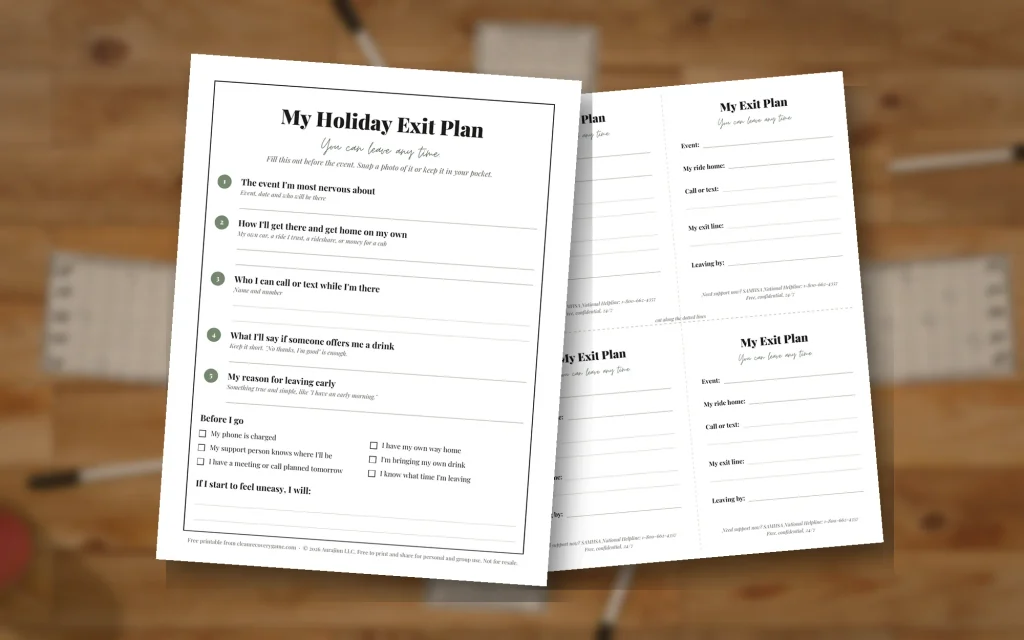
Give each member a copy of our free printable Holiday Exit Plan, or have them write down:
- The event they’re most nervous about
- How they’ll get there and how they’ll get home on their own
- One person they can call or text during the event
- A short, honest reason they can give for leaving early
Invite volunteers to share their plans, and let others offer ideas. People often leave with a better plan than they could have made alone. The printable also includes pocket-sized cards members can fill out and carry with them to the event.
2. Role-Play the Hardest Holiday Conversations
Many people in recovery dread the same few questions:
- “Why aren’t you drinking?”
- “Just have one, it’s a holiday.”
- “Are you still doing that recovery thing?”
Practicing answers out loud can take away much of the sting.
Pair members up, or run it as a group exercise with the facilitator playing the pushy relative. Keep the scenarios light at first, then work up to tougher ones. Afterward, have the group collect its favorite responses on a whiteboard so everyone can borrow a line that fits them.
3. Host a Sober Potluck With a Mocktail Bar
Food is one of the easiest ways to bring people together, and a potluck gives every member a way to contribute, whether they bring a full dish or a bag of chips.
Set up a mocktail station with sparkling water, juices, fresh fruit and a few simple recipes. It shows members that celebrating without alcohol can still feel festive, and it gives them ideas to take to their own gatherings. If your group meets in a facility with food rules, a hot chocolate or coffee bar works just as well.
4. Start a Gratitude Jar
Place a jar and a stack of slips at the front of the room, and ask members to write down one thing they’re grateful for at each session through the end of the year. On the last meeting before New Year’s, read the slips aloud anonymously.
This activity works especially well for groups with a mix of newcomers and long-timers. Newcomers hear how much recovery can change someone’s life, and long-timers get a reminder of how far they’ve come.
5. Write a Letter to Your Future Self
Ask members to write a short letter to themselves to open next holiday season. They can describe what this year was like, what they’re hoping for and what they want their future self to remember.
Collect the letters in sealed, self-addressed envelopes if your program allows it, or encourage members to keep them somewhere safe at home. It’s a quiet, reflective activity that works well after a high-energy session like a potluck or game.
6. Swap Recovery-Themed Gifts on a Budget
A white elephant or Secret Santa swap adds fun without much cost. Set a low limit, like $5 to $10, so no one feels left out.
And, suggest recovery-friendly ideas:
- A favorite recovery book or daily reader
- Specialty teas, coffee or hot cocoa
- A journal and a nice pen
- A small plant, candle or stress ball
Keep a few extra gifts on hand for newcomers or anyone who couldn’t bring one. The goal is connection, and nobody should leave the room empty-handed.
7. Make a Holiday Phone List
The holidays are when people are most likely to feel alone and least likely to reach out. A shared phone list, created with everyone’s permission, makes that first call easier.
Ask members who are comfortable sharing to add their first name, number and the times they’re usually available. Some groups also mark who’s willing to take calls on the holidays themselves. Print copies for everyone, and remind members that calling someone is a strength, not a burden.
8. Plan an Act of Service Together
Service is a core part of many recovery programs, and doing it as a group builds connection fast. Your group might:
- Volunteer at a food bank or shelter meal
- Make holiday cards for a local treatment center or hospital
- Assemble care packages for newcomers
- Host an open meeting on a holiday when other meetings are canceled
Choose an option that fits your members’ schedules and comfort levels. Even a small project gives people a sense of purpose during a season that can otherwise feel empty.
9. Celebrate Milestones Before the Year Ends
Many members will reach a meaningful milestone during the holidays, and some will be celebrating their first sober holiday season. Set aside time at your last meeting of the year to recognize everyone’s progress, whether it’s 30 days or 10 years.
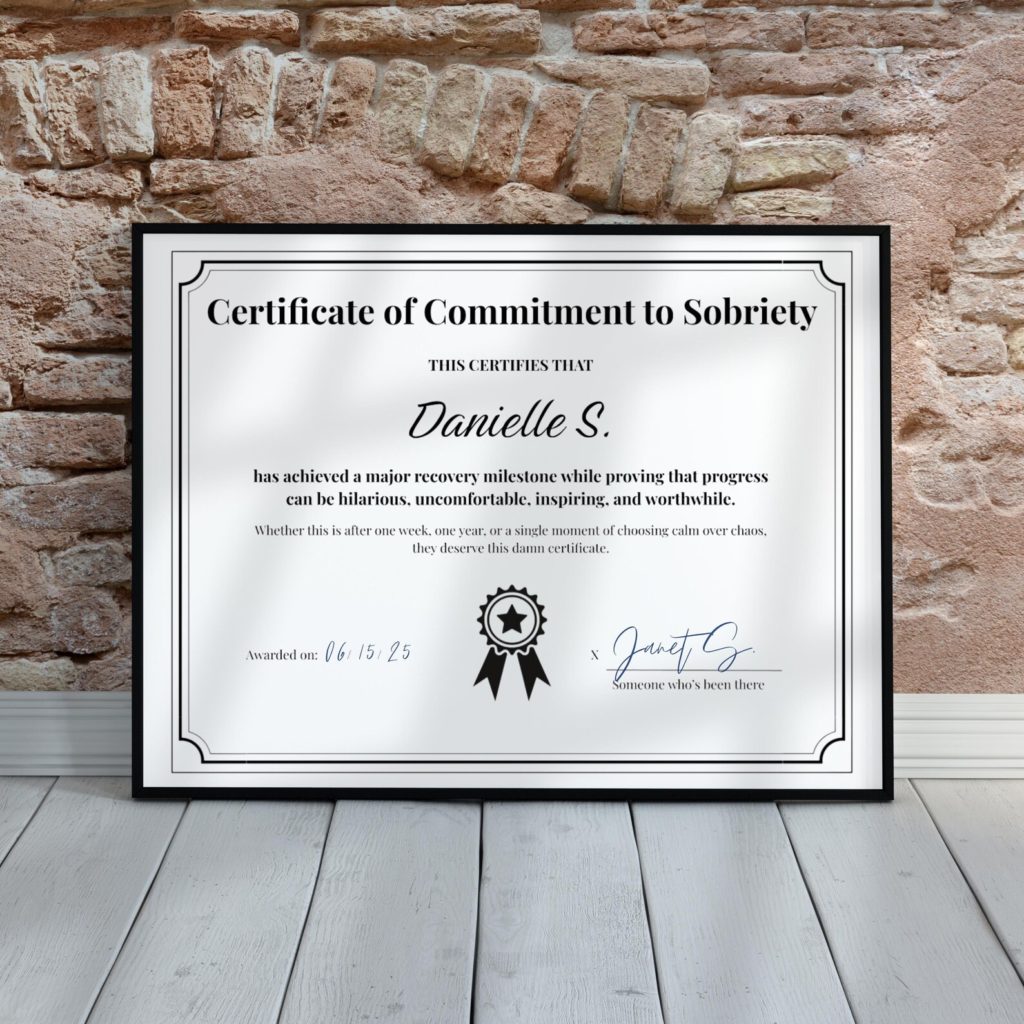
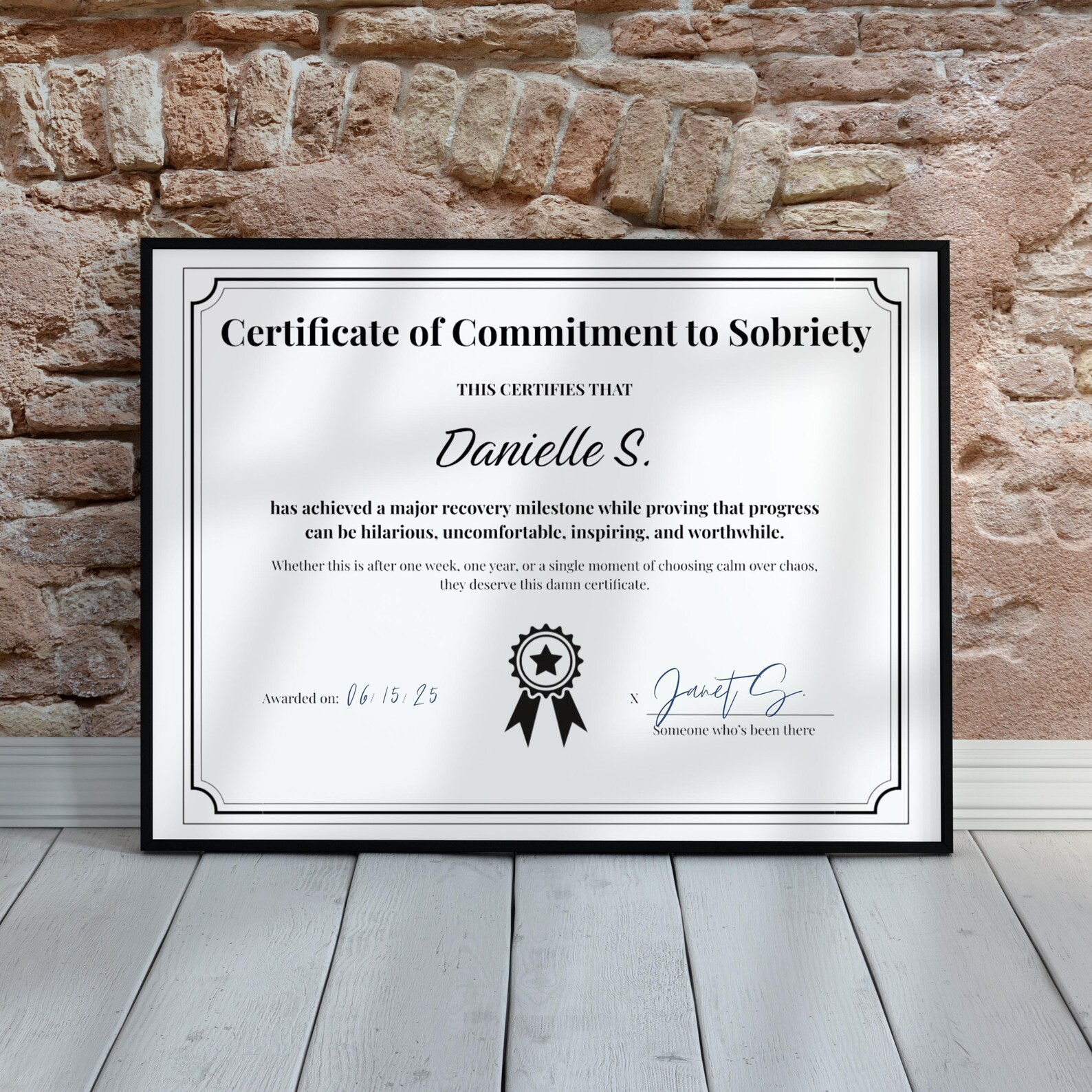
A printed certificate turns that recognition into something people can keep. If you work in a counseling or treatment setting, you can get free, editable sobriety milestone certificates for 30 days, 90 days, six months, one year and any milestone.
10. Hold a “Letting Go” Ritual for the Old Year
Invite members to write down something they’re ready to leave behind, such as a resentment, a fear or an old habit. Then have them tear up the paper, shred it or toss it into a box that gets emptied after the meeting.
Keep this activity simple and optional. Some people will want to talk about what they wrote, and others won’t. Either way, the physical act of letting go can be surprisingly powerful.
11. Create a Sober New Year’s Eve Plan
New Year’s Eve is often the hardest night of the season, so give it its own session in late December. Help members decide where they’ll be, who they’ll be with and what they’ll do at midnight.
Share local sober events, late-night meetings or a group gathering if your program hosts one. Members who leave with a plan are far less likely to end up somewhere they don’t want to be.
12. Play a Holiday Round of CLEAN
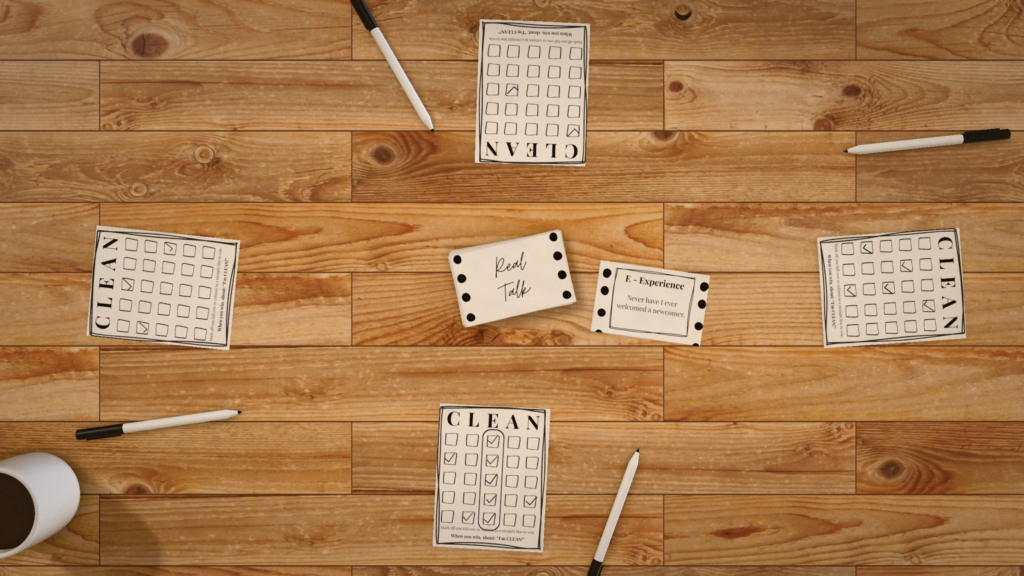
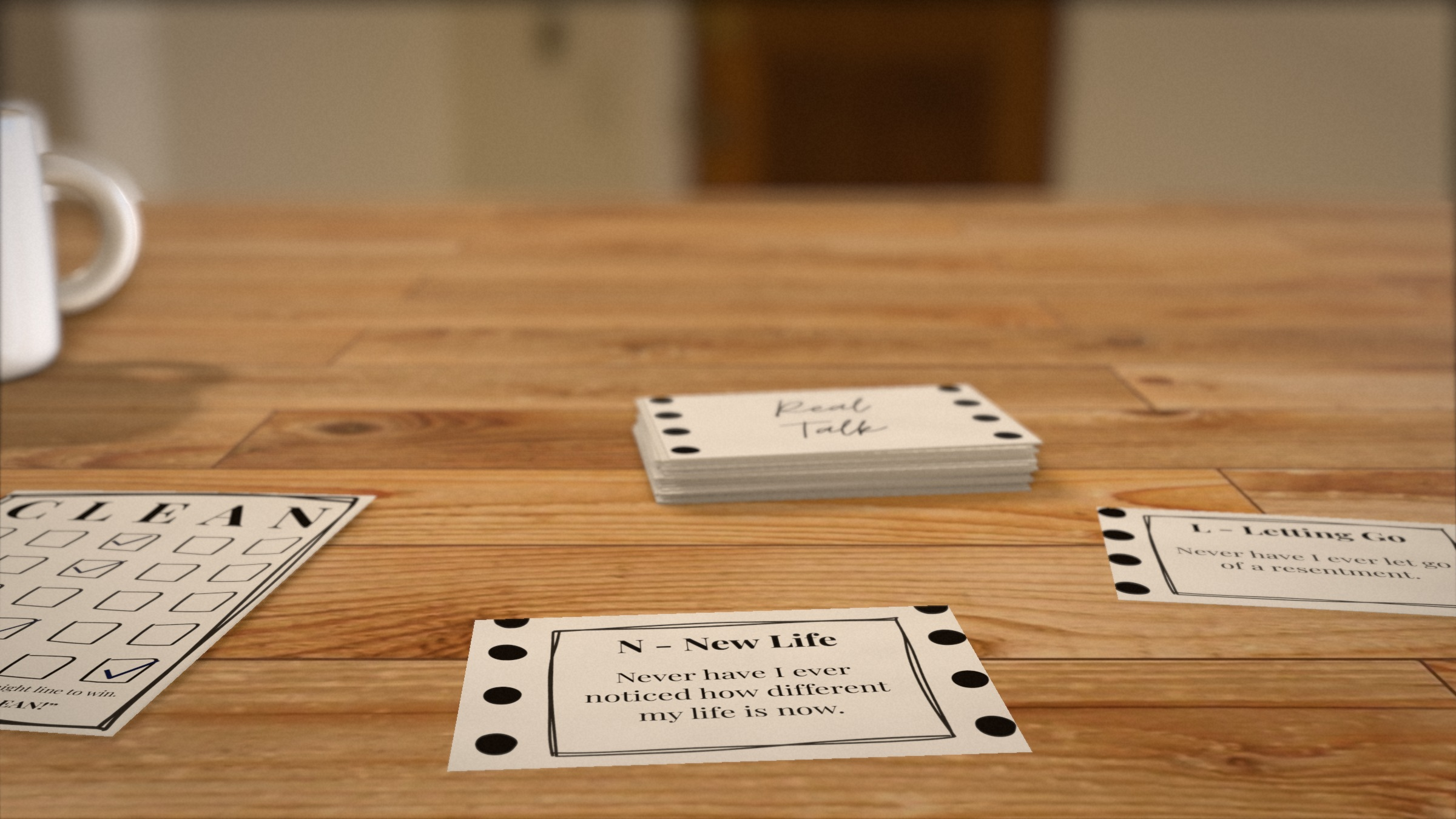
CLEAN is a printable recovery group game that mixes bingo with “Never Have I Ever” style Real Talk cards. Players read cards aloud and mark a box for each thing they’ve done in recovery, so the game celebrates progress instead of past mistakes.
The CLEAN Holiday Edition adds 40 cards about family dinners, holiday parties and New Year’s Eve, with prompts like “Never have I ever skipped a family gathering to protect my peace.” Shuffle them into the original deck, and you have a ready-made session that gets people talking about the season without forcing anyone to share. Since everything prints at home, you can see how the game works and be ready to play the same day.
Tips for Running Holiday Activities in Any Group
A few small choices can make your holiday sessions feel welcoming for everyone. As you plan, keep these in mind:
- Keep sharing optional → Let people pass at any time, and make that clear before each activity.
- Make room for grief → For some members, the holidays bring up loss, so pair upbeat activities with space for honest conversation.
- Include every tradition → Use “holidays” instead of focusing on one celebration, and invite members to share their own traditions.
- Keep costs low → Supply materials yourself when you can, so no one has to choose between joining in and paying a bill.
When people feel safe, they participate more fully. These simple guidelines help every activity on this list land the way you intend.
Make This Holiday Season One Your Group Remembers
The holidays will always bring some challenges, but your group doesn’t have to face them unprepared. When you mix celebration with practical planning, members leave each session with a stronger support network and a few more tools in their pocket.
Pick one or two activities from this list for your next session, and build from there. If you’d like a ready-to-print option, the CLEAN Holiday Edition gives your group 40 new conversation starters made for this season.
If you or someone you know needs support, the SAMHSA National Helpline is free, confidential and available 24/7 at 1-800-662-4357.
Frequently Asked Questions About Holiday Activities for Recovery Groups
What are good holiday activities for recovery groups?
Good holiday activities for recovery groups combine celebration with preparation. Sober potlucks, gift swaps and recovery games like CLEAN build connection, while exit plans, role-plays and phone lists help members get ready for difficult events.
How do you make holidays easier for people in recovery?
Help them plan ahead. Members who know how they’ll get home, who they can call and what they’ll say when someone offers a drink are much better prepared for holiday gatherings.
What can recovery groups do on New Year’s Eve?
Many groups host a sober gathering, a late-night meeting or a game night that ends after midnight. Others use the last session of December to help each member build a personal New Year’s Eve plan.
Are holiday activities appropriate for every recovery group?
Most activities on this list work in 12-step meetings, counseling groups, sober living houses and treatment programs. Keep sharing optional, and adjust activities to fit your setting’s rules and your members’ needs.
How long should a holiday group activity take?
Most of these activities take 15 to 60 minutes. Shorter activities, like a gratitude jar or a few rounds of a game, work as icebreakers, while exit plans and role-plays can fill a full session.